Education
Blog
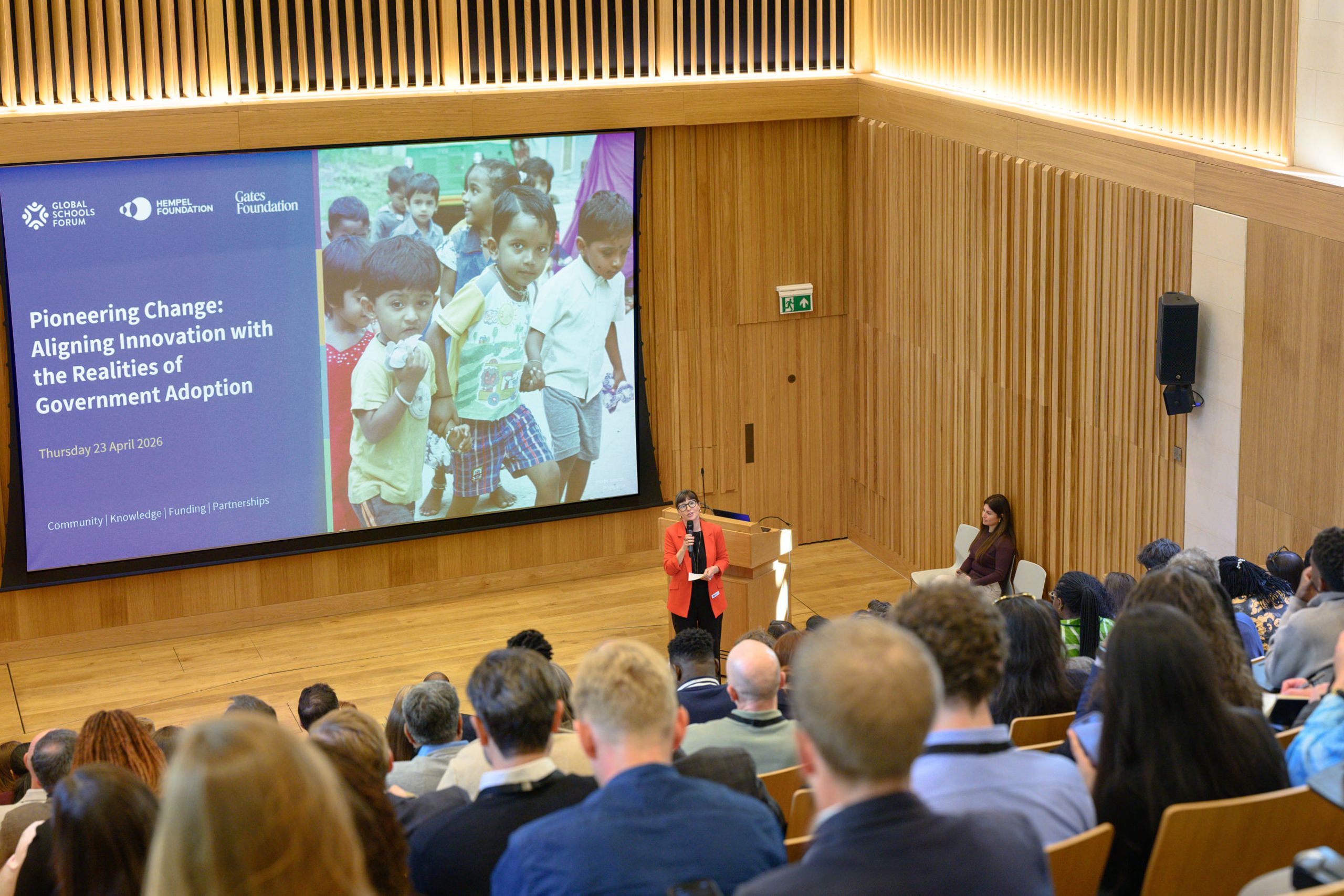
Article co-authored by Alina Lipcan, Director of Programmes and incoming CEO (effective 1 May 2026), Global Schools Forum, Rosa Robinson, Senior Manager, Education Partnerships, Hempel Foundation, and Izzy Boggild-Jones, Programme Officer, Global Education, Gates Foundation.
At the Skoll World Forum last week, the Global Schools Forum, Hempel Foundation, and Gates Foundation co-hosted Pioneering Change: Aligning Education Innovation with the Realities of Government Adoption - bringing together thought leaders, innovators, funders, and practitioners with a shared ambition to tackle one of the most pressing challenges in global education today.
Across low- and middle-income countries, hundreds of millions of children attend school but do not learn basic literacy and numeracy. With seven in ten children not learning the basics, countries face profound challenges to human capital development, economic growth, and social progress.
One message came through clearly: innovation alone is not enough. Lasting adoption depends on working with governments from the outset, co-designing solutions in partnership, aligned to government priorities, systems and budgets.
In her opening remarks, Dr. Obiageli (Dr. Oby) Ezekwesili, CEO of Human Capital Africa and former Education Minister of Nigeria and Vice President for Africa at the World Bank delivered a powerful message on innovation and government adoption:
"We have to go back to the drawing board. It's a design failure, not a lack of political will. We sometimes don't acknowledge it. The design failure is that the system is designed to reward innovation and not adoption. We reward novelty. Adoption is not glamorous. Adoption produces the most important results. It is not a short-term horizon. We have innovation but not adoption. Adoption requires serious specificity in the conversations that we have. It requires the government to sit in the design room as co-authors."
Innovators including grantees on the Impact at Scale Labs programme, Impact Accelerator programme, and organisations from the GSF community delivering education solutions in the Global South shared examples of their innovations, experiences of aligning and collaborating with government, and stories of success when it comes to aligning their innovations with government adoption and improved learning outcomes.
Susan Place-Everhart, Chief Executive Officer, and Tony Dogbe, Executive Director, Ghana, Sabre Education, GSF member and Impact at Scale Labs programme grantee, shared insights on their measurable and lasting impact scaling with government in Ghana and across public and private school programmes, reaching over 360,000 children with quality early childhood education and training over 6,000 teachers.
It was also inspiring to hear from innovators on the Impact Accelerator programme: LearnImpact Tanzania, Inspire, Educate, Empower (IEE) Rwanda, EducAid Sierra Leone and the People’s Action for Learning Network (PAL Network).
Youdi Schipper, co-founder of LearnImpact in Tanzania, shared how the Impact Accelerator strengthens small-scale education solutions, noting the valuable support on positioning and communicating core strengths, and how the programme has strengthened funding networks and government partnerships.
Emmanuel Murenzi, Country Director for Inspire, Educate and Empower (IEE) in Rwanda, shared insights on scaling teacher professional development for early learning with government, and learnings around teacher capacity development, strengthened instructional leadership, and active parental and community engagement. All with close attention to measuring learning outcomes and continuously engaging with government partners at various levels.
Erin Northey, CEO of EducAid in Sierra Leone, noted that despite a learning poverty rate of 95.8%, with 10-year-olds unable to read age-appropriate text, EducAid has made significant progress through their District of Excellence initiative: a system and capacity-strengthening intervention working hand-in-hand with district-level Ministry of Basic and Senior Secondary Education (MBSSE) officials to support them in leading sustainable improvements to all schools in their districts.
Armando Ali, CEO of the global PAL Network, underscored the critical importance of data for decision-making in tackling the learning crisis. He introduced the audience to PAL Network’s citizen-led model for collecting learning outcome data at the household level — an approach that generates robust, nationally representative datasets on children’s actual learning levels. He emphasised that timely, accessible data is essential to inform policy, guide implementation, and drive accountability.
Merlia Shaukath, Founder and CEO, Madhi Foundation and GSF member, shared insights on reimagining foundational learning at scale, and offered five key learnings: aligning people and partnerships, investing in every layer of the bureaucracy, understanding the system and staying grounded in reality, co-creating intentionally, and building continuous learning loops.
The session closed with a funder hotseat, exploring what they wished they’d known about government systems from the outset and what it had cost them to learn it.
Rosa Robinson, Hempel Foundation, said:
“What is ingrained in the Hempel Foundation’s philanthropic vision is to support both the supply of what works and the demand for it within government systems. The question is no longer whether solutions exist, but whether they can be delivered at scale with quality and speed. Governments are not mere stakeholders; they are stewards of national systems. It requires coordination, persistence, and an ecosystem to translate what works into system-wide change."
Dr Oby said:
"When ministers say yes to innovation, it doesn't mean a yes to adoption. After they say yes, they must spend political capital defending that yes, fighting curriculum groups, unions, examination boards, and being called on by the president. They are expending political capital, as is the minister of finance. They need partners who stay in the room to fight alongside them, not just for the photo opportunity. Partners have to hold on for longer."
Izzy Boggild-Jones, Programme Officer, Global Education, Gates Foundation, said:
"We work together to set the frameworks, and then as a funder we take a step back. The good ideas are with the implementers. Our job is to provide support, but the innovations are tapped into government systems on the ground. If you think about great examples of government reform, the most powerful have involved walking alongside government. Funders can find innovation and also fund partners doing just that - where both the donor and the partner step back, and the government leads.”
These insights will help shape the next phase of the Global Schools Forum’s Impact at Scale Labs programme: Acceleration to Fluency (A2F). A2F will provide funding, tailored coaching and support, access to ecosystem partners and peers to improve reading fluency. The programme will work with promising innovators to identify and validate practical, classroom-based solutions focused on one of education's most critical milestones: getting children in Sub-Saharan Africa reading fluently by the end of Grade 3.
It is clear that the path to aligning education innovations with government adoption is a long-term endeavor that must be intentionally and truly co-designed. It is not just about innovation. What matters is building on the relationships, partnerships, and scale required to embed solutions into systems. As the lightning panelists demonstrated, real impact comes when approaches move beyond pilots and take root in systems - delivering education outcomes for millions of children in low-resource settings.
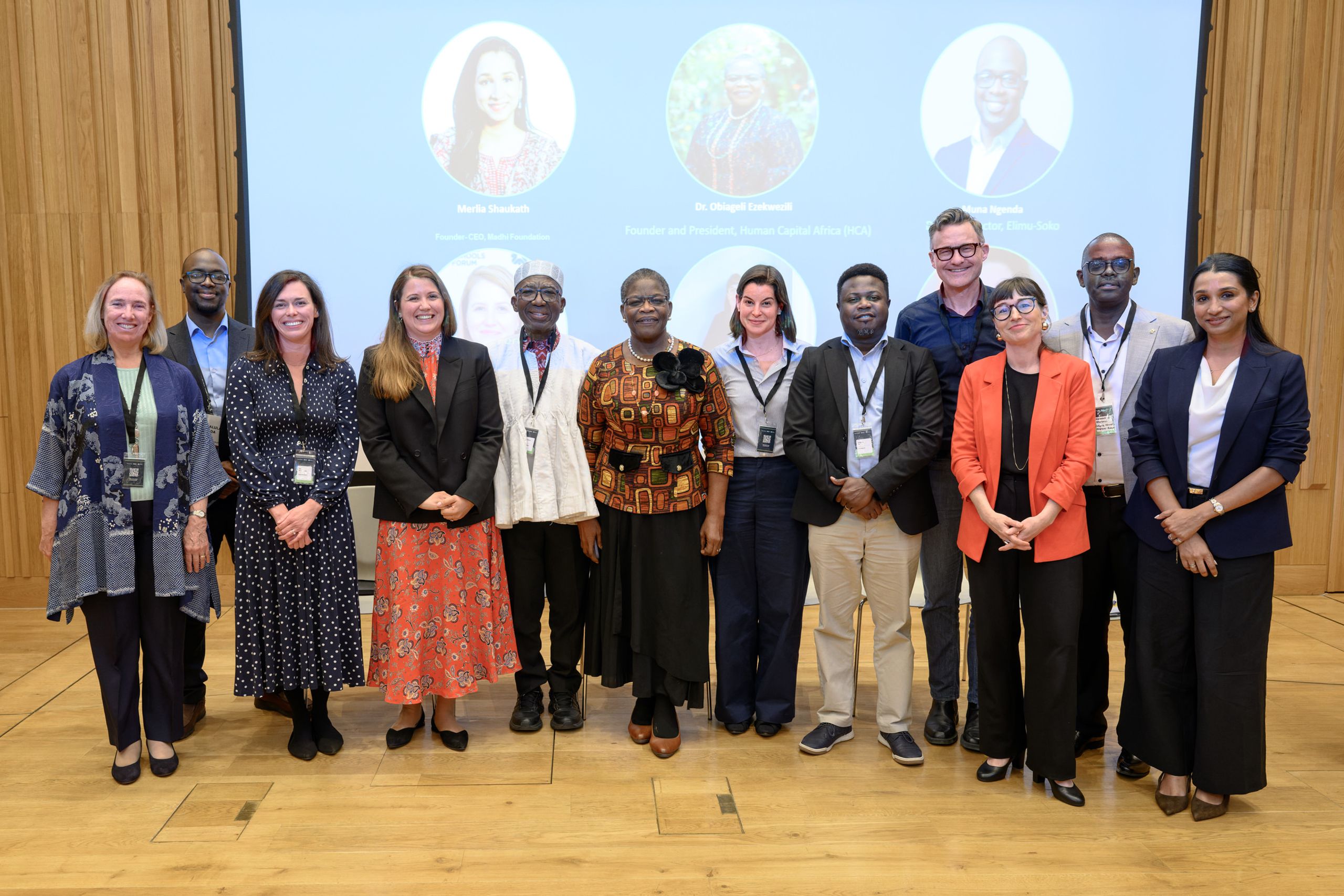
Thanks to all our panelists and discussants.
Dr Oby Ezekwesili, Senior Economic Advisor, Africa Economic Development Policy Initiative Susan Place-Everhart, Chief Executive Officer, Sabre Education Tony Dogbe, Executive Director, Ghana, Sabre Education Merlia Shaukath, Founder and CEO, Madhi Foundation Youdi Schipper, LearnImpact Emmanuel Murenzi, Country Director, Inspire, Educate and Empower, Rwanda Erin Northey, CEO, EducAid Sierra Leone Armando Ali, Chief Executive Officer, PAL Network Alina Lipcan, Director, Global Schools Forum Izzy Boggild-Jones, Programme Officer, Gates Foundation Muna Ngenda, Deputy Director, Elimu-soko Rosa Robinson, Senior Manager, Hempel Foundation


About Global Schools Forum
Global Schools Forum is a community convenor, knowledge accelerator, funding catalyst, and partnership builder supporting non-state organisations in low- and middle-income countries to innovate, deepen impact, and achieve scale.
Find out more about the Impact at Scale Labs programmes here
Learn more about the Impact Accelerator programme here
About the Gates Foundation
The Gates Foundation focuses on improving foundational learning in Africa and India, and supporting partners to innovate and integrate effective solutions within government systems is a key part of this.
Find out more about the Gates Foundation here